Tag Archives | other stuff

Is Focusing On Your Activities Part of Your Daily Plan?

Why is it important for marketers  to make “Focus” their number one priority in their daily activities?

Is Focusing on one thing fay in fay out a good thing?

Read below and then answer the question:

Marketers Focus on Activities

I think it starts with understanding where the alignment issues start. Marketers focus too much on their activities and not enough on business outcomes. We list our accomplishements as:

  • How many emails were sent
  • How many webcasts were produced
  • How many events were sponsored
  • How many ads were bought
  • How many priced of content we created
  • How many leads we generated

So maybe we need to stop talk about how many and talk about how much value these activities generate.

Read more here:

Comments are closed

Spray Tanning Beauty Treatment

If you are ever in Fuerteventura Spain come and have a spray tanning beauty treatment. (men and women)

Comments are closed

Search Marketing

This blog post is worth a read if you are still hesitant about doing search marketing.

“The fact is, it’s getting harder and harder for brands to compete with the power of the personal network. According to Search Marketing Land, a significant ratio of the top 100 results for more queries is consumer-generated media such as blogs and social networks. This is why social media is so important to brands. If you’re still focusing on outbound communications and search engine optimization without building a groundswell of social content, you’re likely losing in the war for online eyeballs.

So add social search to your kit of SEO and paid search. Building influencers, online communities, and social at scale is the new search. Forward thinking marketers are beginning to use social search to understand the social behavior of their clients and acting on it.

If social search is discovery, traditional search is the validation of that discovery. Brands are using social data to understand consumer intent and pushing out relevant data to consumers—before they even know they’re interested—by using sophisticated purchase intent models.” Source B2B Marketing Insider.

Comments are closed

Rule 1: The customer is always right (Part 1)

Rule 2: If the customer is wrong, rule 1 applies.

It is said that for every person who complains, there are 26 silent sufferers, and each unhappy customer tells 10 to 16 other people. But if you address the problem in the right way, 90 per cent of the complainers will do business with you again. When people complain, they are usually angry or upset. This can be difficult to handle in a second language. Here is a six-stage process, with examples of appropriate language:

1) Listen positively and empathize
Don’t try to defend yourself or the company. Allow the customer to let off steam. Show understanding.

  • “What seems to be the problem?”
    • “Can you elaborate?”
    • “Could you give me the details?”
    • “That must have been very irritating.”
    • “I understand how you must feel.”

2) Admit the mistake and apologize
Don’t put the customer on the defensive or question his judgement. Admit mistakes immediately.

  • “I really am sorry.”
    • “It seems something has gone wrong here.”
    • “There’s definitely a problem here we need to deal with.”
    • “I’m very sorry about this.”
    • “I must apologize on behalf of the company for this.”

3) Accept personal responsibility
For customers, you are the company. They don’t care whose fault it is. You have to deal with it. If the problem can be dealt with only by someone higher in the hierarchy, stay with the customer until it is clear that the problem is being resolved.

  • “I’ll make sure this is dealt with.”
    • “Let me see what I can do.”
Comments are closed

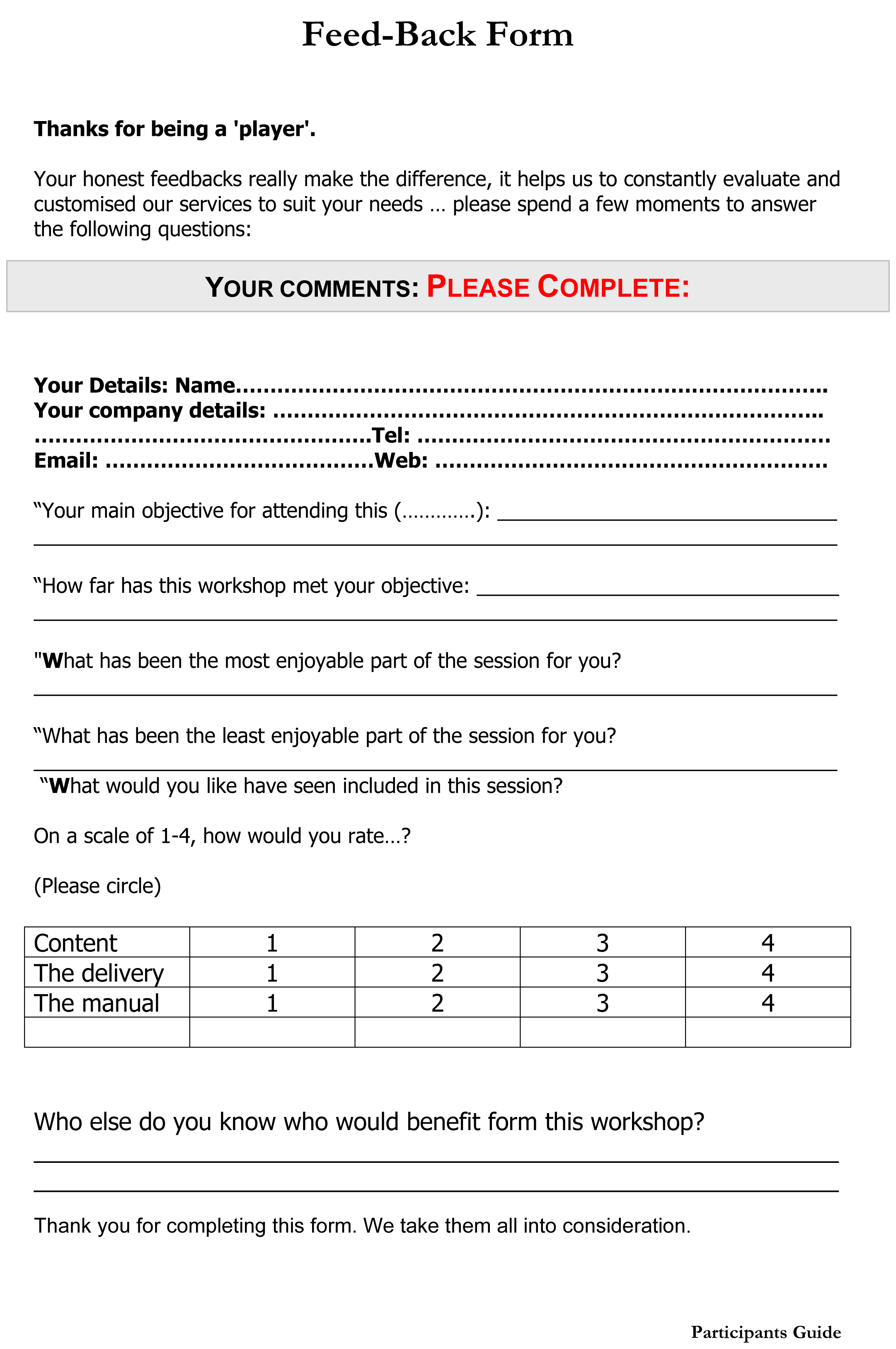
Feedback Questionnaire

Here is a sample feedback questionnaire you might find useful.

Template-for-Feed-Back-form


Comments are closed

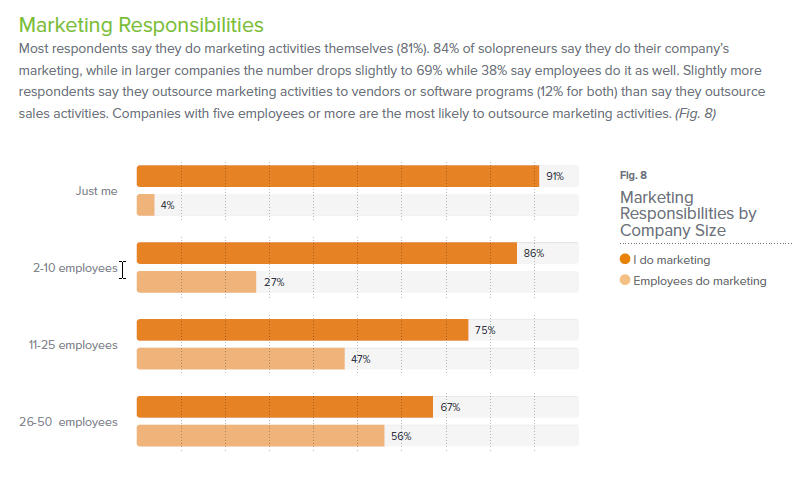
Marketing Responsibilities

Marketing Responsibilities
Source: Infusionsoft.

Comments are closed