About admin

Author Archive | admin

Training Needs Analysis

Thinking of doing training? Here’s a template for sales training needs Analysis that you might find useful.


Company  Background

  • What is your business unit responsible for?
  • How many employees are there?
  • What are your annual sales/revenues?
  • Who are your biggest customers?
  • Any recent business changes?
  • What are your business objectives (long-term and short-term)?
  • What will be the impact if you miss objectives?
  • What results are you getting now?
  • How close are you to meeting those objectives?
  • What are your key business challenges (external and internal)?
  • What are your marketing strategies?
  • What are the three most important things you need to do in your department?
  • What is the mission of your department?

Training Need

  • Who is the target audience (job, length of service, age, size of group, etc.)?
  • What problem needs to be addressed? Why?
  • How was that problem identified?
  • Has this problem been addressed in the past? How? With what results?
  • What type of performance is needed if business goals are to be realized?
  • What must supervisors and managers do differently or better in the future? How prepared do you believe they are to perform in this manner?
  • Describe someone who is performing at peak.
  • What must each type of employee do differently or better?
  • What should people be doing to achieve the goal?
  • What will it look like if the goal is achieved?
  • Who is sponsoring/requesting this training? What is important to them?
  • How open is the audience to the training?
  • What is the target date for implementation and completion?
  • What obstacles may hinder completion of the project?
  • What things are contributing to the problem which are not in your control (competition, etc.)?
  • What are the forces outside your control that will make accomplishment of these goals difficult or challenging? (for example, changes in the economy or governmental regulations)
  • What are the forces within your control that will make accomplishment of the goals difficult or challenging? (for example, reward system, etc.)
  • What forces will help in accomplishing these goals?
  • What are their primary reasons for the goal not being accomplished?
  • Was there ever a time when you were achieving the goal? Why do you think it changed?
  • Do people know what is expected regarding the goal? How do they know?

Success Criteria

  • What are the outcomes desired? What will success look like?
  • How will success be measured?
  • When is a return on investment expected?
  • Who will measure success?
  • If the training goal is achieved, what will be the impact on the organization?
  • How will you know if you meet the goal?
  • What measurements will you use to determine if the goal is met?
Comments are closed

Email Marketing In 2015

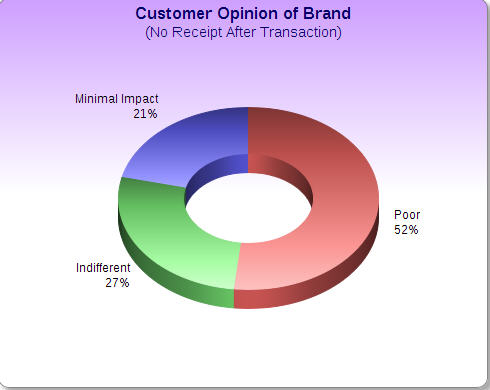
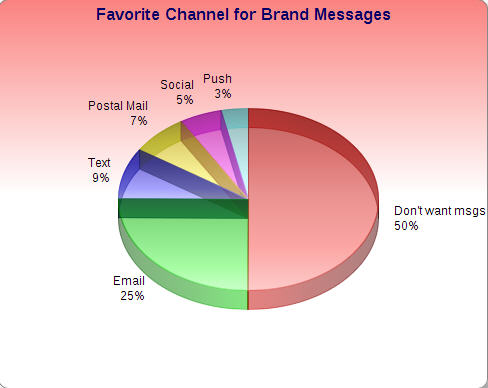
This is what customers has to say about email marketing. Here are some astonishing results of a recent survey conducted by email platform messagesystems.com.


Email channel


Customers opinion


Us email marketing of interest to you? Check out the full details here:

Comments are closed

What is OMNI-Channel?

Check it out below.

Source Marketingprofs – are-you-read-to-tackle-omni-channel-in-the-2014-holiday-season-infographic.

tackling-omnichannel-in-the-holiday-season-infographic

Comments are closed

Data Protection Takes a Business-Friendly Twist

1. The right to data protection is not an absolute right but must be balanced with other fundamental rights, including the freedom to conduct a business, in a proportionate way.

2. Direct marketing is recognised as a legitimate interest in the collection and processing of data. This allows businesses to use legitimate interest as a legal basis for processing personal information, along with preventing and monitoring fraud and pseudonymising personal data.

3. Unambiguous consent replaces explicit consent. Marketers won’t have to use an opt-in tick box to obtain consent. Individuals could give consent orally, in writing, and browser settings or other application where this is technically feasible and effective.

4. Compulsory appointment of a data protection officer (DPO) left at the discretion of individual Member States. The UK Government has a track record of doing the minimum required to comply with EU data protection legislation so UK businesses probably won’t be required to appoint a dedicated DPO. Even if the UK Government did go for the appointment of a DPO, the Irish draft text allows businesses to appoint somebody who was already working in a legal or compliance or IT security function. This is because the draft text clarifies that the DPO can fulfil other obligations, provided there is no conflict of interest.

5. A risk-based approach to data security breaches notifications. Businesses won’t have to notify individuals of every single data security breach, especially if there is little or no risk to personal data. If, for example, the data controller implemented technological protection measures to make sure the data was anonymised and those measures were applied to the data affected by the data security breach, there would be no need to notify the individual about the breach. Other obligations on data controllers and data processors in Chapter 4 make reference to a risk-based approach. So the requirement to carry out a data protection assessment is only required where any processing operations are likely to present specific risks. Source DMA – Read the full story here:

Comments are closed

Additional Closing Questions 2

additional questions

Mr Prospect, The objective of this face-to-face meeting is to show you exactly what you can do to get from (Challenge) to (Outcome) which will enable you to improve (service/product).

Using the information from the telephone discussion … We’ll be able to map out exactly what you can get, not only (whatever outcome, solution, benefit they are looking for), but we’ll also show you what additional ideas you can add to (business/department) to cost effectively (XXX).

You’ll get a full briefing of what these ideas are and how they could work for you as well as an indication of how they could improve (_________) in your business.

Getting to the point where you can see exactly what should be done in your business would be immensely valuable wouldn’t it? (Must get positive response).

Mr Prospect, provided you and (name who ever is conducting the meeting) like what is being delivered to you at this stage and you believe we/I can help you to (outcome, benefit, solution) in your business … Then and only then will we/I make a recommendation to you and subsequently put the steps in place to meet your objectives, your budgets and needs of your business. We/I will outline all these in my proposal to you. I’d like to add at this point … our fees would always be in alignment with your budget therefore making sure that this will be a comfortable investment for you.

We/I’ll then invite you to look at how (widget company) can help you into those opportunities so you’ll get … (whatever outcome, solution, benefit they’re looking for). That does sound’s fair doesn’t it?

Comments are closed

Additional Closing Questions

Cold Calling

Here us a great additional Closing Questions you can ask a prospective customer when doing a telemarketing presentation over the phone.


“Excellent, the next step is to arrange a time to meet.

(Name), just before we fix a time, can I just confirm a couple of details to make sure that you are in a position to take immediate advantage of the opportunities we find for you when we meet?

Providing you like the (whatever outcome, benefit, solution they want), and let’s assume that you want to take it further … is there anything that is likely to prevent you from beginning immediately? Such as upcoming projects, staff changes, annual leave, mergers etc?

So would you be in a position to go ahead straight away if that’s what you want to do?

It’s been in our experience that if anyone other than yourself contributes to the decision making process that they are also included in the discussion … This is simply to ensure the time spent, is the most effective use of both our time. Who else should be involved in the decision making process?


Comments are closed